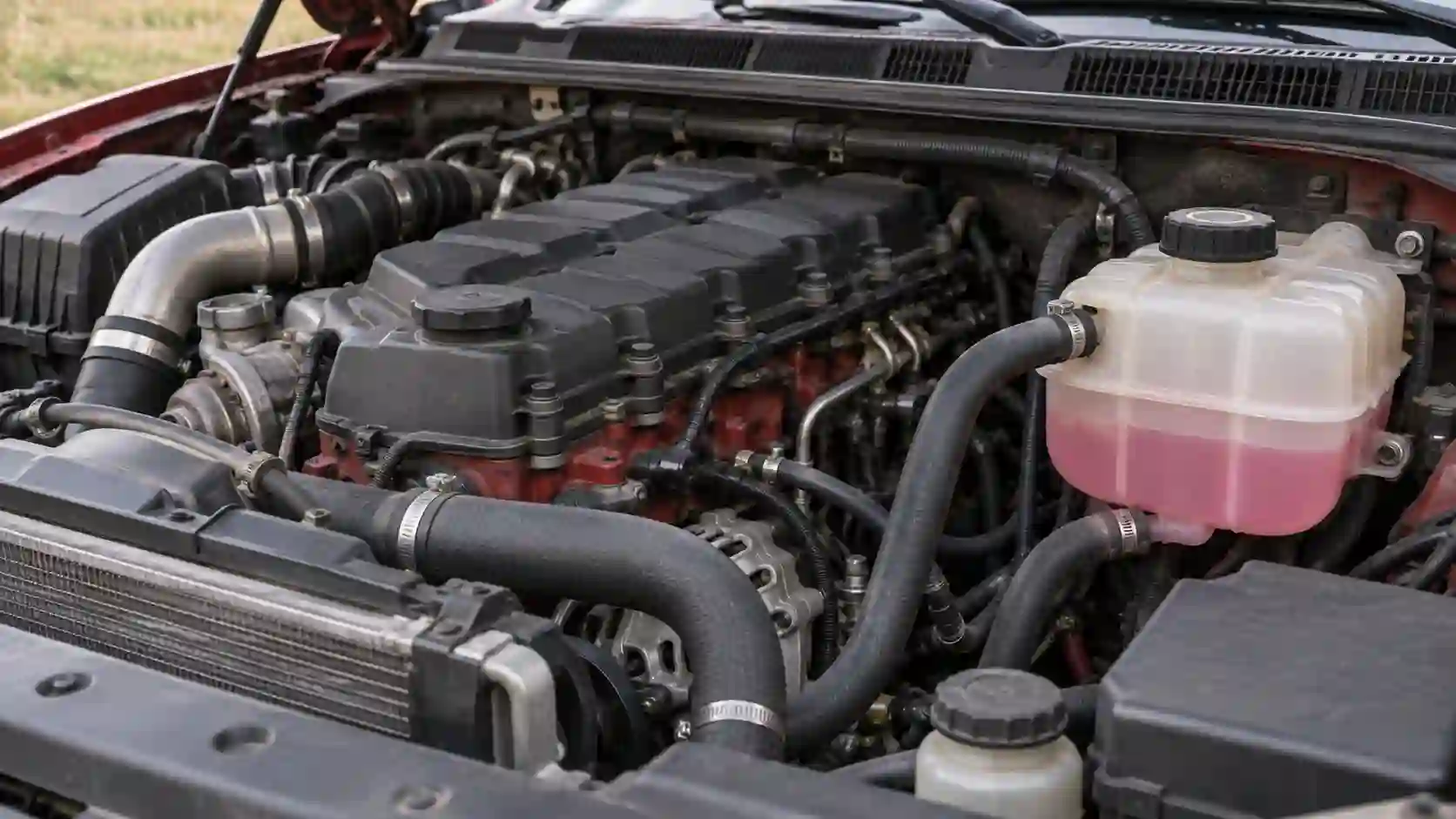
A Cummins engine fuel system moves diesel from the tank to the engine, but fuel flow is only part of its job. It must also keep dirt and water out, build pressure and deliver the right amount of fuel to each cylinder.
For a workshop, these separate jobs help explain where a fault may start. For a parts buyer, they help clarify which pump, filter or injector the repair needs. This guide explains a common-rail layout and shows how to use that knowledge during Cummins engine maintenance and parts selection.
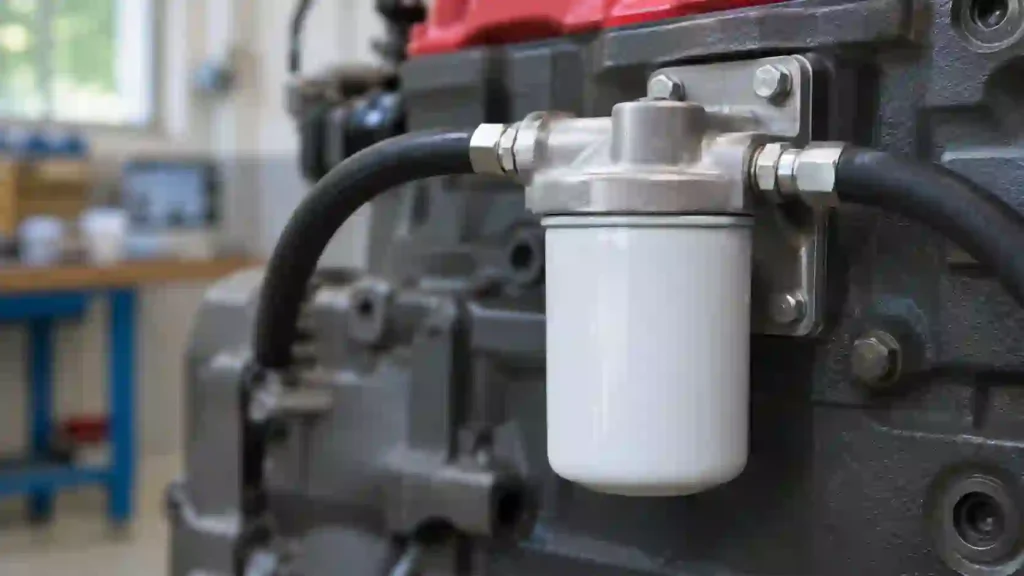
Cummins Engine Fuel System Types
Before choosing parts for a Cummins engine fuel system, identify its injection type. Cummins engines span several designs, including mechanical injection, PT systems, unit injection and common rail. As a result, one fuel-flow diagram cannot describe every engine.
In a Cummins common rail fuel system, the pump builds pressure and feeds a shared rail. The rail holds pressurized fuel for the injectors. Meanwhile, electronic controls determine when the injectors open and how much fuel they deliver.
Cummins offers different common-rail packages, including mid-range and heavy-duty XPI systems. Even within this group, pump designs and layouts vary. Therefore, use the actual engine’s service information when tracing pipes or choosing parts.
Fuel Flow Through a Cummins Engine Fuel System
A common-rail system has three main sections: low-pressure supply, high-pressure injection and return flow. The following sequence explains their roles.
1. Fuel leaves the tank. The supply circuit carries diesel toward the engine.
2. Filters remove contaminants. The installed filter and water-separator arrangement helps keep particles and water away from injection parts.
3. The supply stage feeds the high-pressure pump. It moves fuel through the low-pressure side of the circuit.
4. The high-pressure pump feeds the rail. The pump builds the pressure needed by the common-rail injection system.
5. Injectors deliver fuel. Each injector meters fuel into its cylinder under electronic control.
6. Return passages carry fuel away. Fuel that follows designated return paths moves through the return circuit.
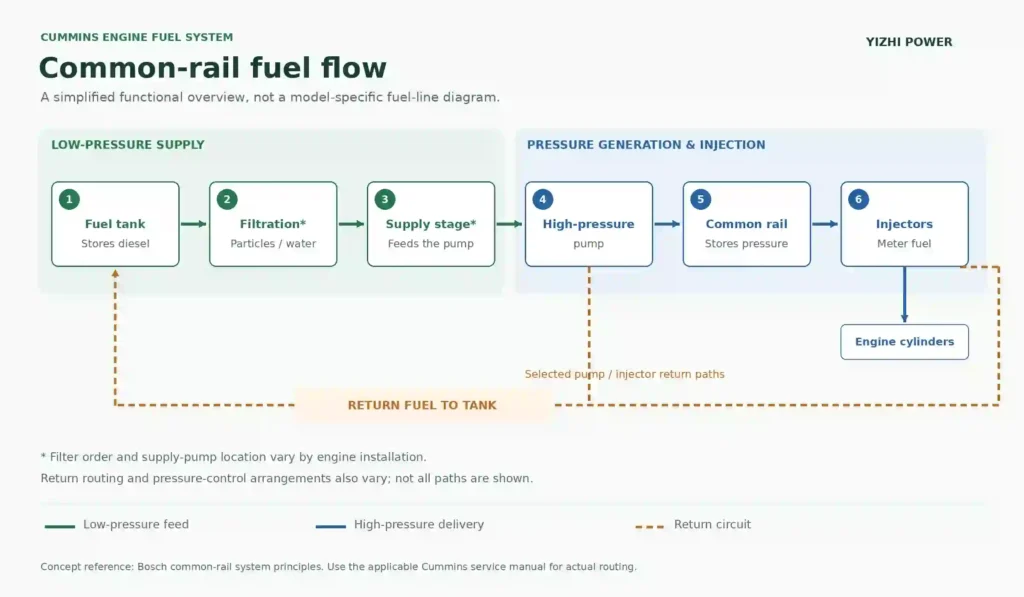
This is a simplified outline. Actual filter positions, pump arrangements and return routes differ by engine. For that reason, it should not replace a model-specific installation diagram.
The distinction between supply and injection also matters during repairs. If too little fuel reaches the high-pressure pump, the workshop needs to investigate the supply side. A rail-pressure concern, however, may involve several parts of the system. Calling either issue a “bad fuel pump” leaves the repair question unanswered.
Cummins Engine Fuel System Components
| Bileşen | Main job | What to clarify during a repair |
|---|---|---|
| Supply or transfer pump | Moves fuel through the low-pressure circuit | Is this the pump the workshop means? |
| Fuel filters and water separator | Remove particles and separate water | Which filter position and specification apply? |
| High-pressure pump | Builds pressure for the common rail | Has the workshop checked its fuel supply? |
| Fuel rail | Holds pressurized fuel for the injectors | What does the pressure test show? |
| Enjektörler | Meter fuel into the cylinders | What test supports their replacement? |
| Sensors and control devices | Monitor and control system operation | Has the workshop checked the fault’s cause? |
| Return lines | Carry designated return fuel | Does the routing match the engine’s layout? |
The phrase “fuel pump” can cause confusion in a quotation. A supply pump and a high-pressure pump perform different jobs. Therefore, ask the workshop to name the assembly before comparing offers from suppliers.
Filtration in a Cummins Engine Fuel System
Dirt and water can damage precision fuel-system parts. Because of this, a pump or injector repair should include a review of fuel condition and filtration.
Particle filtration and water separation serve different purposes. A filter may fit the mounting head yet fail to meet the required performance. For example, matching its thread and outer size does not confirm that it provides the right protection.
Bizim guide to Cummins filter types explains the wider filter range. For fuel-system service, identify each filter position and use the specified replacement.
If the workshop finds contamination, replacing the pump alone will not clean the rest of the circuit. Instead, the repair plan must address the affected areas. Depending on the findings, that may involve the tank, lines or injection equipment. The applicable service procedure should guide the scope of the work.
What to Check Before Ordering a Pump or Injectors
When assessing a Cummins engine fuel system, separate the symptom from its cause. For example, “low rail pressure” describes a condition. It does not prove that the high-pressure pump has failed. For a wider look at starting, power-loss and rough-idle symptoms, see our Cummins engine troubleshooting guide.
Before placing an order, ask the workshop to record:
- When the issue occurs: during starting, at idle or under load.
- What it checked upstream: fuel supply, filter condition and supply-line integrity.
- What the tests show: fault codes, measurements and the procedure used.
- Whether it found contamination: and how that affects the repair plan.
With this information, a parts buyer can request a defined component rather than guess at a solution. It also gives the supplier a clearer basis for checking the replacement.
Next, match the assembly to the actual engine. Our Cummins ISF2.5 fuel pump 5628088, for instance, is a specific product listing. It is not a universal pump for Cummins engines. Similar looks or the same engine displacement do not establish a match.
The workshop should confirm the repair need. The supplier can then check the requested part against the engine application and part reference.
High-pressure safety: Never loosen high-pressure fuel fittings while the engine is running. Before starting work, follow the engine’s service procedure for shutdown and pressure release.
Sonuç
A Cummins engine fuel system works as a connected circuit. The supply stage moves fuel, filters protect the injection parts, and the injection system controls delivery to the cylinders. In a common-rail layout, the pump, rail and injectors each have a distinct role.
Understanding those roles helps workshops explain repairs and buyers order the correct parts. First, identify the installed system. Then, use test findings to define the repair, address any fuel contamination and verify the replacement against the engine application.
Sık Sorulan Sorular
Q1: My workshop says I need a fuel pump. Which one should I order?
A1: First, ask whether it means the supply pump or the high-pressure injection pump. Then request the part number, a clear photo of the existing unit and the engine serial number. “Cummins fuel pump” alone does not define the replacement.
Q2: Does low rail pressure mean I need a new high-pressure pump?
A2: No. Supply issues, pressure control and injector operation may also need checks. Therefore, ask the workshop for the test findings behind its recommendation. Use the engine-specific diagnostic procedure before approving a pump replacement.
Q3: Can I use the same pump or injectors on engines of the same size?
A3: Not on engine size alone. Engines with the same displacement can use different injection equipment. Check the part against the actual engine application and parts information. A similar shape does not prove that it will fit or work correctly.
Q4: If dirty fuel damaged the pump, can we replace only the pump?
A4: That depends on where the contamination has reached. A new pump will not clean the tank, lines or other parts. For that reason, the workshop must assess the circuit and follow the required cleaning, inspection and replacement procedure.
Q5: Can I choose a fuel filter by its size and thread?
A5: No. A physical match does not confirm the right particle filtration or water separation. Instead, use the filter specified for that position in the installed system. If the reference is unclear, confirm it before fitting another filter.
- WhatsApp: +86 186 7197 8898
- E-posta: info@yzdlparts.com
- Web: www.yzdlparts.com