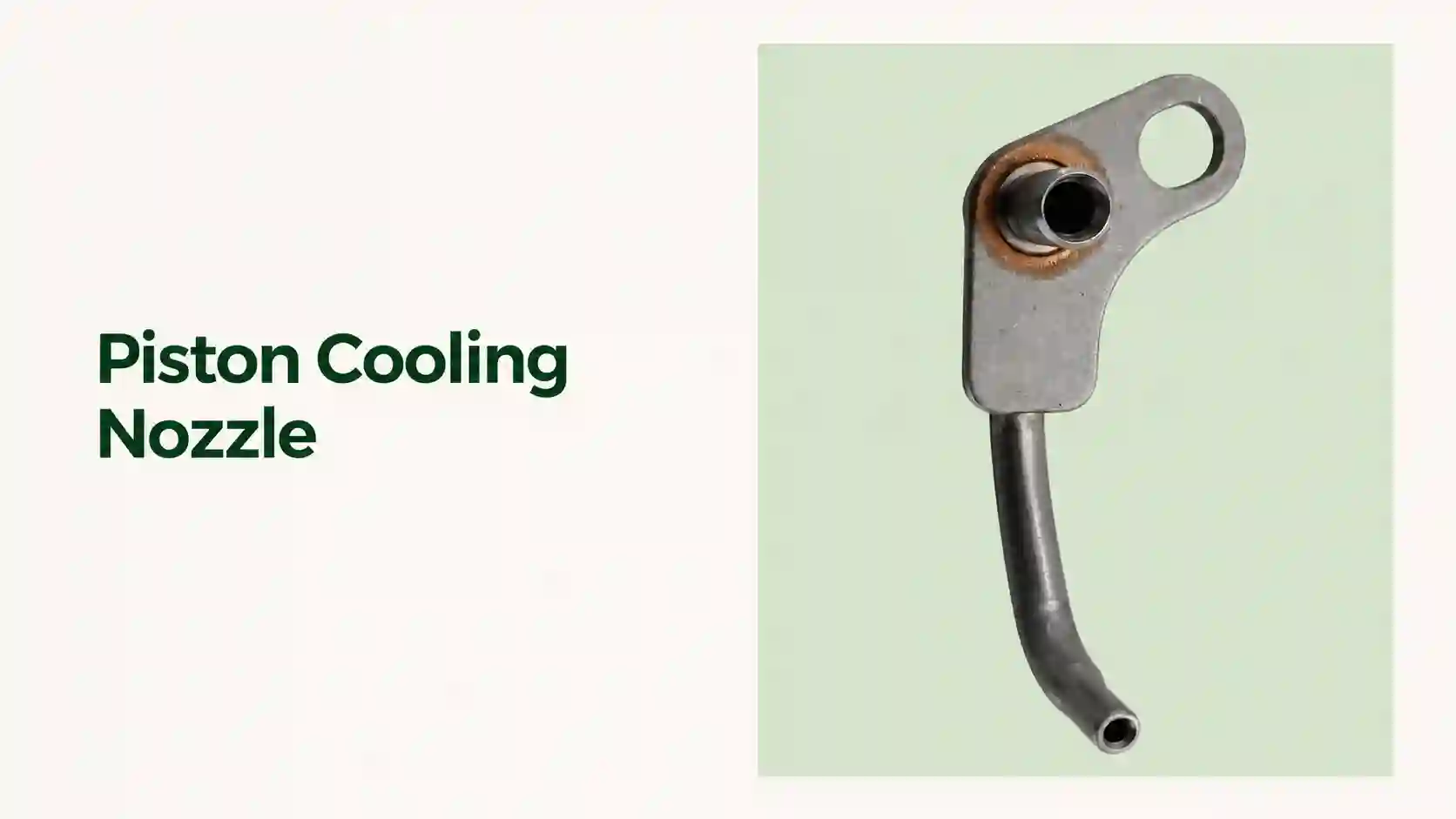










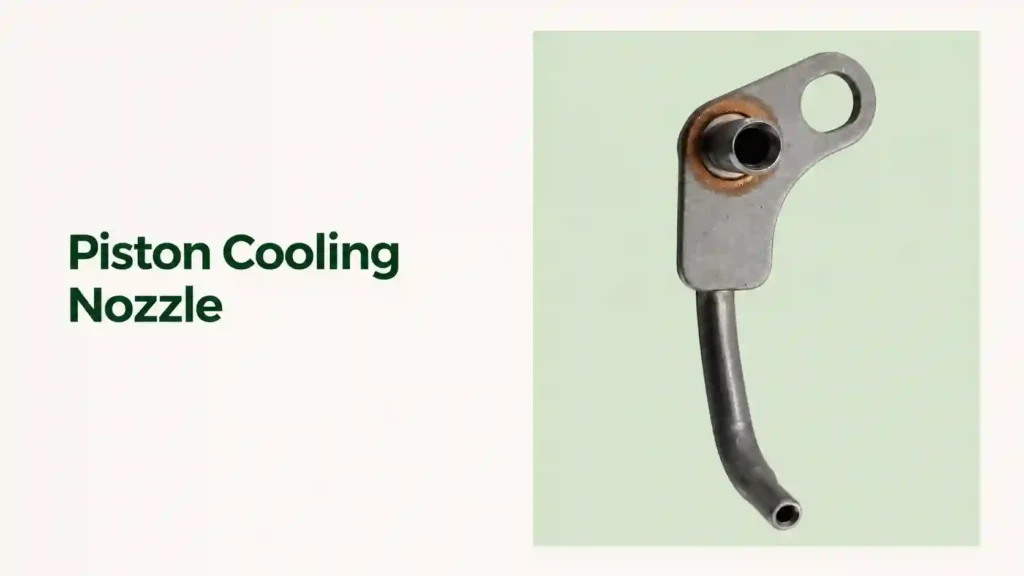
A piston cooling nozzle sprays engine oil at the underside of a diesel piston or into an inlet in the piston itself. The oil picks up heat from the crown and drains back into the sump. Workshop manuals may call the same part a piston cooling jet or piston oil squirter.
During an overhaul, a connecting rod can catch the nozzle as it comes out of the bore. A nozzle with a slight bend can still pass oil, yet the stream may no longer reach the spot it was aimed at.
How a Piston Cooling Nozzle Works
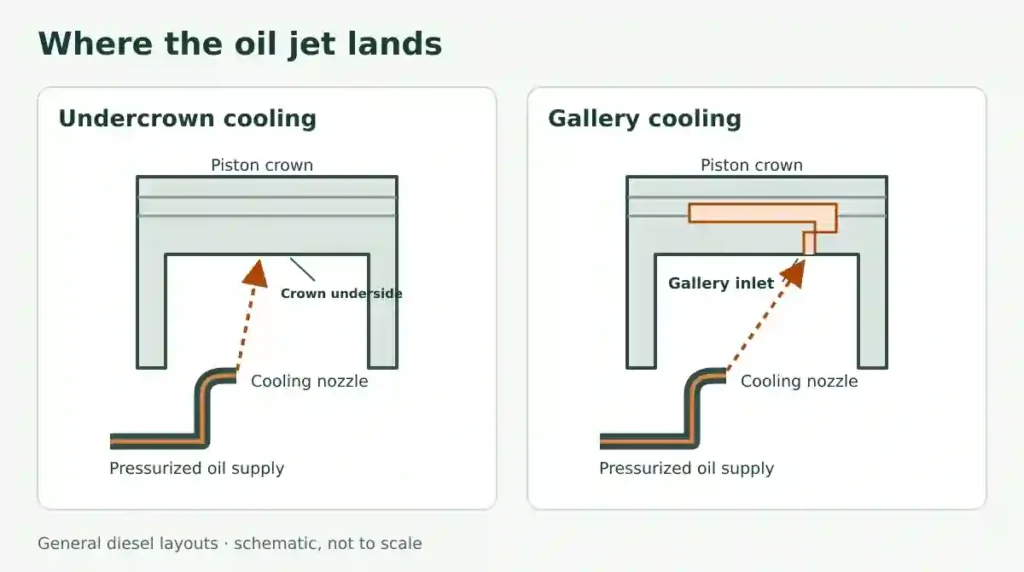
In a typical block-mounted layout, a passage branches off the engine’s pressurized oil supply and feeds the nozzle below the piston. From there, the piston design determines where the oil should land.
| Cooling layout | Where the oil goes | How it carries heat away |
|---|---|---|
| Undercrown cooling | The underside of the piston crown | Oil spreads over the exposed surface and drains away. |
| Gallery cooling | The inlet to a passage inside the piston | Oil flows through the passage near the crown before draining out. |
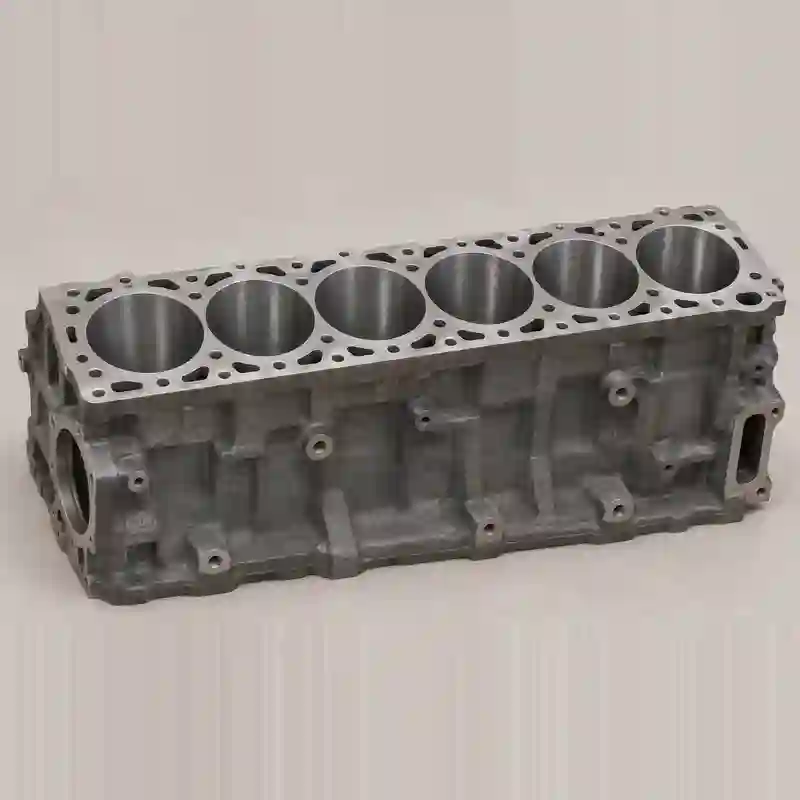
On a gallery-cooled piston, the stream has to reach the inlet. A jet that lands next to it can leave the gallery with less flow, even when the nozzle’s opening is clear. Our diesel engine block guide shows how the engine’s oil passages fit into the rest of the block.
What to Check During an Overhaul
Look at the nozzle while you have access to the block. On an engine where the nozzle remains in place during piston removal, pay particular attention to any part that the rod could have touched. A damaged outlet affects the flow itself. A bent tube or a nozzle that sits out of position affects where it lands.
| What you find | What it can affect |
|---|---|
| Debris at the outlet | Oil flow through the nozzle |
| A bent or damaged tube | The point where the oil stream lands |
| A loose or displaced nozzle | The jet’s alignment with the piston |
Piston skirt scuffing after a rebuild is a reason to include the nozzle in the inspection. The wear marks alone are insufficient to identify the cause. Use the service procedure for the engine to check the nozzle’s condition and alignment, especially if you find signs that it made contact with the rod or piston.
FAW CA6DM2 Example: Finding the Nozzle in the Parts Drawing
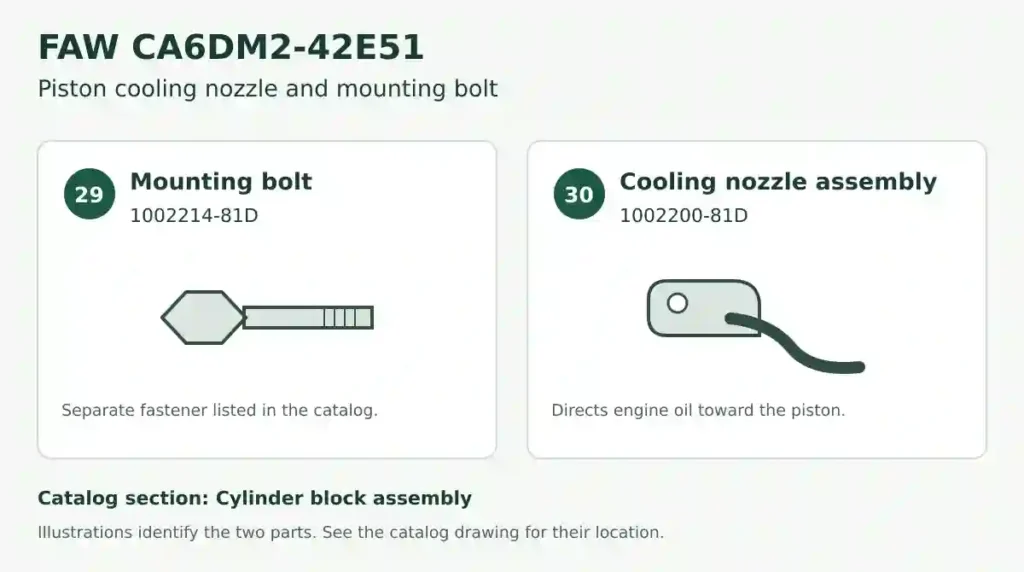
On the FAW CA6DM2-42E51, look under the cylinder block assembly. The parts drawing shows the cooling nozzle and its bolt as two separate entries.
| Drawing item | Part number | Description |
|---|---|---|
| 29 | 1002214-81D | Nozzle mounting bolt |
| 30 | 1002200-81D | Piston cooling nozzle assembly |
The FAW 1002200-81D product page shows the nozzle outside the engine. Use the drawing to identify the part, and the service manual for your engine version to check spray alignment, tightening torque and any applicable opening-pressure specification. See our CA6DM2 maintenance and parts guide for the wider engine layout and related components.
Conclusion
A piston cooling nozzle needs a clear oil path and the correct aim. During a rebuild, inspect the outlet, tube and mounting position while the block is accessible. If you are working on a CA6DM2-42E51, start with item 30 in the cylinder block drawing to identify the nozzle.
Frequently Asked Questions
Q1. Does a piston cooling nozzle spray fuel or engine oil?
A1. It sprays engine oil. It sits below the piston and uses the engine’s pressurized oil supply to carry heat away from the piston.
Q2. Can a nozzle still pass oil if it is bent?
A2. Yes. Oil can still come out while the stream misses its intended target, such as the entrance to a piston cooling gallery.
Q3. Where is the FAW 1002200-81D nozzle in the catalog?
A3. It is item 30 in the CA6DM2-42E51 cylinder block drawing. The mounting bolt, 1002214-81D, is item 29.