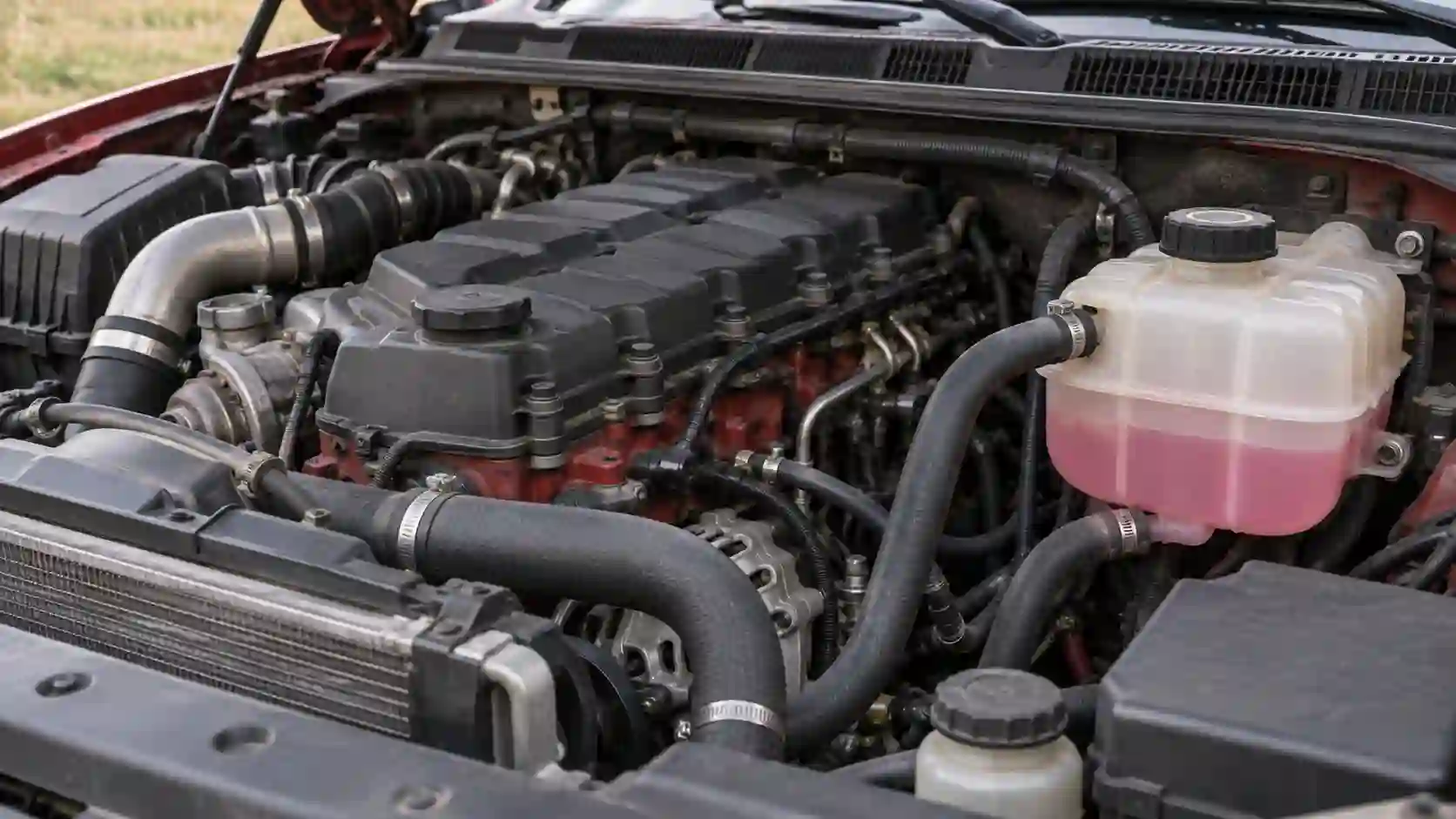
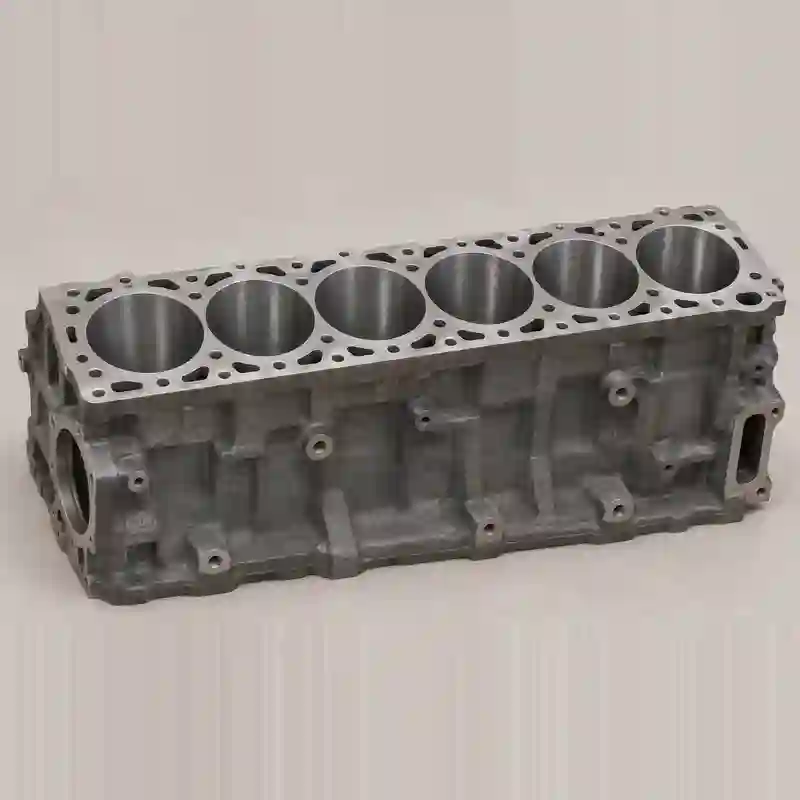
To understand diesel engine block function, picture the engine with the cylinder head lifted off and the oil pan removed. From above, you can see where the pistons travel. From below, you can see the supports that hold the crankshaft in line. Inside the casting, separate passages carry oil to bearings and coolant around the cylinders.
Engine Block Function Under Load
On the power stroke, combustion pressure pushes the piston down. The connecting rod turns that push into rotation at the crankshaft. The crankshaft’s main journals turn in bearings supported by the block. Its crankpins, offset from the main journals, carry the connecting rods. That offset is what gives the piston leverage to turn the shaft.
Alignment is central to engine block function. The main bearings must share a centerline so the crankshaft can turn on a film of oil. At the top of the block, the machined face called the *deck* provides a surface for the head gasket. These two features do different jobs, even though both are machined into the same structure.
Where Do the Piston Rings Run?
Look down a cylinder and the surface you see may be the machined bore of the block or a separate cylinder liner. In both designs, the piston rings slide against the finished cylinder surface. The rings help seal combustion pressure and control the oil film on the wall.
A wet liner has coolant in direct contact with its outer wall. A dry liner sits in a supporting bore and transfers heat through the surrounding metal. This difference matters when reading a parts drawing. A drawing that shows a separate liner gives you a reason to check the liner reference and any seals listed for that design.
Engine Block Function in Lubrication and Cooling
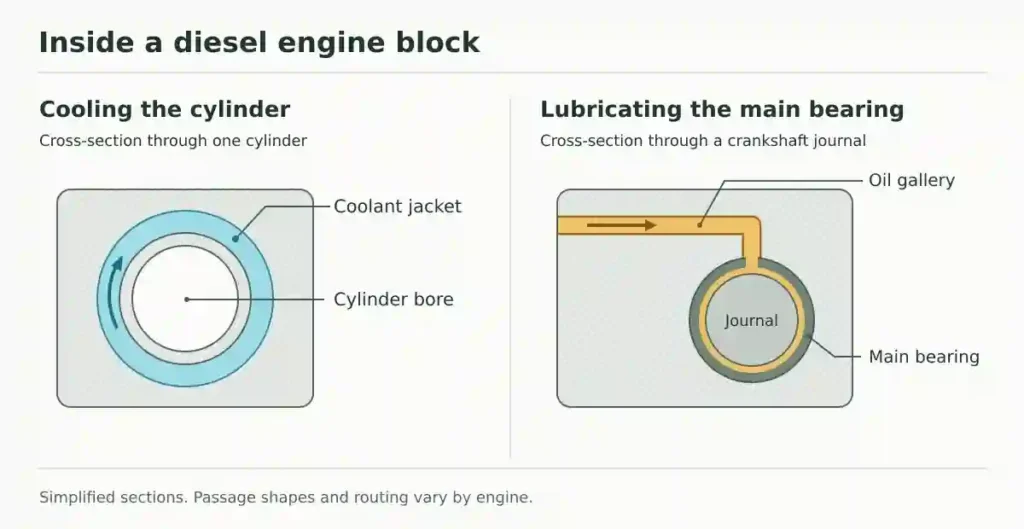
Oil galleries are passages that distribute pressurized oil. One route feeds the main bearings. On many diesels, drilled passages in the crankshaft carry oil onward to the connecting-rod bearings. Oil draining back to the pan follows a different path from the pressurized supply.
The coolant passages around the cylinders form the water jacket. Coolant picks up heat there and carries it away. At the deck, the head gasket seals the joint and allows flow through designated openings between the block and head. For a closer look at the component above that joint, see our cylinder head guide.
Bare Block or Short Block? A Cummins X15 Example
Two listings can name the same engine family and describe quite different purchases. Our X15 cylinder block 4298515 listing identifies the block by part number. That number alone does not tell you which liners, plugs or bearings come with a particular quotation.
By comparison, our Cummins X15 short block assembly lists the block, crankshaft and pistons. If your workshop plans to reuse its crankshaft, that difference affects what you need to order. Give the supplier the engine serial number and existing block reference, then ask for an itemized list of the installed components.
סיכום
The easiest way to remember engine block function is to follow one piston stroke. The cylinder guides the piston, the block supports the turning crankshaft, and the oil and coolant passages serve the loaded and heated surfaces. When the discussion moves from function to replacement, the next question is which of those components the quoted assembly includes.
Frequently asked questions
Q1. Do engine block and cylinder block mean the same thing?
A1. Both names commonly refer to the main casting that contains or supports the cylinders. When comparing catalog entries, check whether the description also says ‘assembly’ and lists installed parts.
Q2. Where is the crankcase in relation to the block?
A2. The crankcase encloses the area where the crankshaft turns. Its upper portion is part of the block in many designs. A separate lower crankcase or bedplate may also appear in the parts drawing.
Q3. Does a short block include the cylinder head?
A3. The X15 short block described here excludes the head. Its specification lists the block, crankshaft, and pistons. If the repair also calls for a cylinder head, identify it separately when requesting a quote.
- WhatsApp: +86 186 7197 8898
- דוא"ל: info@yzdlparts.com
- אתר אינטרנט: www.yzdlparts.com