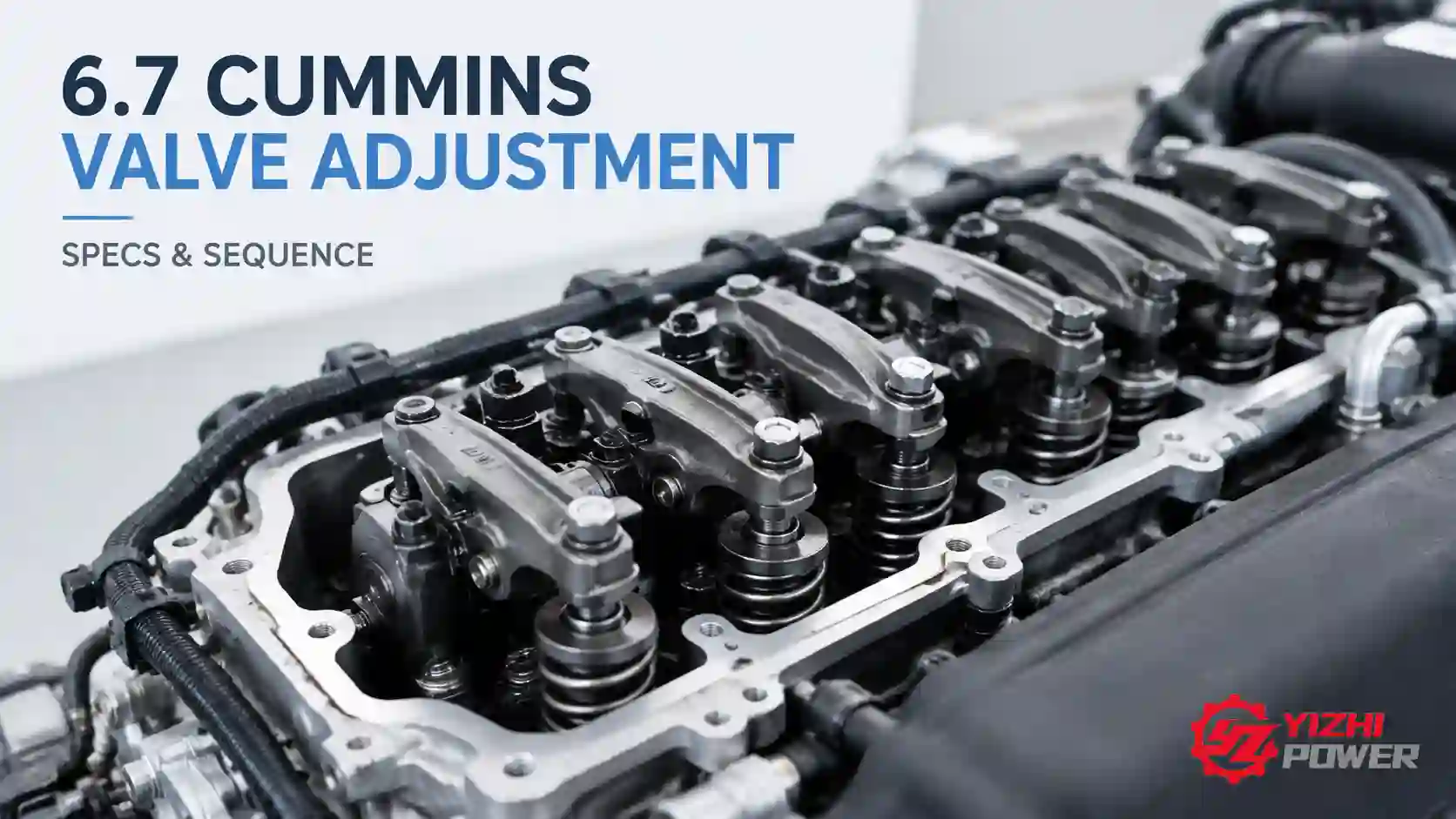
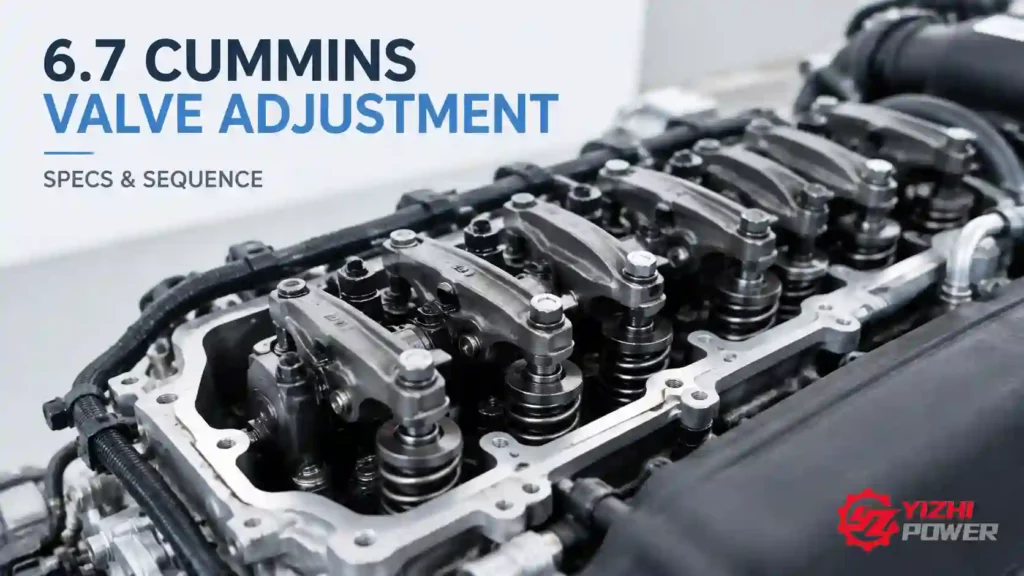
En 6.7 Cummins valve adjustment procedure checks and corrects the clearance between the rocker arms and valve train components. Correct valve lash matters because clearance outside the specified range can affect how the valves operate.
The adjustment interval and specifications depend on the engine application and model year. This guide uses the documented procedure for the 2016 Ram 3500 HD Chassis Cab with the 6.7L Cummins engine (VIN L) as its main reference. It covers the valve lash limits, adjustment targets, and cylinder sequence.
Does the 6.7 Cummins Need Valve Adjustment?
Yes, some 6.7 Cummins applications require periodic valve lash adjustment, but the interval depends on the model year and application.
For the 2018 6.7L Cummins Pickup, Cummins lists a valve lash adjustment interval of 150,000 miles (240,000 km). This interval applies to the 2018 Pickup application shown in its maintenance information. It should not automatically be applied to every 6.7L Cummins engine.
Earlier service information also describes the 24-valve overhead system as a low-maintenance design. For example, the 2010 Ram 3500 Chassis Cab procedure says routine adjustment is no longer necessary, but technicians should still measure valve lash when diagnosing performance problems or after removing and reinstalling valve train components or injectors.
Before scheduling an adjustment, check the maintenance schedule for your exact model year and vehicle application.
6.7 Cummins Valve Lash Specifications
The following figures come from the referenced 2016 Ram 3500 HD Chassis Cab 6.7L service procedure.
| Tipo de válvula | Minimum Clearance | Maximum Clearance | Adjustment Target |
| Intake | 0.006 in (0.152 mm) | 0.015 in (0.381 mm) | 0.010 in (0.254 mm) |
| Exhaust | 0.021 in (0.533 mm) | 0.034 in (0.863 mm) | 0.026 in (0.660 mm) |
The minimum and maximum values define the acceptable measurement range. The adjustment target is the clearance to use when a valve falls outside that range and requires correction.
Important: If the measured clearance is already within the specified limits, the referenced procedure does not require an adjustment. Do not reset every valve to the target value simply because you are performing an inspection.
How to Adjust Valves on a 6.7 Cummins
The following sequence follows the 2016 Ram 3500 HD Chassis Cab service procedure. Valve lash measurements and adjustments must be performed with the engine coolant temperature below 60°C (140°F).
1. Prepare the Engine
- Allow the engine to cool below 60°C (140°F).
- Disconnect and isolate both negative battery cables.
- Remove the cylinder head cover.
- Prepare a feeler gauge and the appropriate crankshaft barring tool.
The referenced service procedure specifies barring tool 7471B for rotating the crankshaft. Use the correct tool and procedure for your engine application.
2. Position the Crankshaft at TDC
Use the barring tool to rotate the crankshaft until the damper TDC mark reaches the 12 o’clock position.
Check both rocker levers on cylinder No. 1. If both are loose, the crankshaft is in the correct position for the first group of measurements.
If both rocker levers are not loose, rotate the crankshaft another 360 degrees and check again.
3. Measure the First Group of Valves
With cylinder No. 1 at the correct TDC position, check these valves:
- Intake: Cylinders 1, 2, and 4
- Exhaust: Cylinders 1, 3, and 5
Insert the feeler gauge between the rocker arm socket and the crosshead. Compare each measurement with the intake or exhaust limits in the specification table.
If a measurement falls within its acceptable range, leave that valve as it is. If it falls outside the range, adjust it to the specified target clearance.
4. Adjust Valve Lash Where Necessary
For any valve outside the allowable range:
- Loosen the rocker arm locknut.
- Turn the adjusting screw until the clearance reaches the specified target.
- Hold the adjusting screw in position and tighten the locknut.
- Recheck the clearance with the feeler gauge.
For this 2016 application, the adjustment targets are:
- Intake: 0.010 in (0.254 mm)
- Exhaust: 0.026 in (0.660 mm)
Tighten the locknut to 24 N·m (18 ft-lb), then measure the clearance again. The final reading should match the target within the applicable service procedure.
5. Rotate the Crankshaft and Check the Remaining Valves
Rotate the crankshaft one full revolution (360 degrees) until the damper TDC mark returns to the 12 o’clock position.
Measure the remaining valves:
- Intake: Cylinders 3, 5, and 6
- Exhaust: Cylinders 2, 4, and 6
Use the same measurement limits and adjustment targets. Adjust only the valves that fall outside the specified range, then recheck each adjusted clearance.
After completing the measurements, reinstall the cylinder head cover and reconnect both negative battery cables.
6.7 Cummins Valve Adjustment Sequence
| Crankshaft Position | Intake Valves | Exhaust Valves |
| No. 1 cylinder at TDC, both rocker levers loose | 1, 2, 4 | 1, 3, 5 |
| Crankshaft rotated 360° | 3, 5, 6 | 2, 4, 6 |
The sequence identifies which valves you can measure at each position. It does not replace the valve lash specifications or the full service procedure.
If you are looking for a 6.7 Cummins valve adjustment sequence PDF, use the service manual that matches your truck’s model year and application. A sequence chart alone does not provide all the clearance limits, adjustment targets, or torque specifications needed for the job.
Common Valve Lash Adjustment Errors
A few mistakes can lead to incorrect measurements or unnecessary adjustments:
- Using the wrong crankshaft position: Check that both No. 1 rocker levers are loose before measuring the first group.
- Applying specifications from another application: Confirm the engine and vehicle details before using any valve lash chart.
- Adjusting valves that are already within range: The referenced procedure only calls for adjustment when the measured clearance falls outside the specified limits.
- Skipping the final measurement: Recheck the clearance after tightening each locknut.
Conclusión
The correct 6.7 Cummins valve adjustment starts with the right service information. Confirm the engine application, check the specified valve lash limits, and follow the correct crankshaft position and cylinder sequence. If a measurement falls within the acceptable range, the referenced procedure does not call for an adjustment.
YIZHI POWER supplies Cummins diesel engines and engine parts for B2B customers, including distributors, parts dealers, and repair businesses. Contact our team if you need help sourcing Cummins engine components.
Preguntas frecuentes
Q1: How often should you adjust the valves on a 6.7 Cummins?
A1: It depends on the model year and application. Cummins lists a 150,000-mile (240,000-km) valve lash adjustment interval for the 2018 6.7L Pickup. Check the owner’s manual or service information for your specific engine before following that interval.
Q2: Does a 2018 Ram 6.7 Cummins need valve adjustment?
A2: Yes. Cummins lists valve lash adjustment at 150,000 miles (240,000 km) for its 2018 6.7L Pickup application. Follow the maintenance schedule for the vehicle rather than assuming the same interval applies to every 6.7L Cummins.
Q3: Are valve lash specifications the same for every 6.7 Cummins?
A3: No. Specifications and procedures must match the engine application and model year. The intake and exhaust values in this guide come from a specific 2016 Ram 3500 HD Chassis Cab service procedure. Do not use them as universal specifications for all 6.7L Cummins engines.
Q4: What is the correct valve adjustment sequence for a 6.7 Cummins?
A4: In the referenced 2016 procedure, the first position covers intake valves 1, 2, and 4 and exhaust valves 1, 3, and 5. After rotating the crankshaft 360 degrees, check intake valves 3, 5, and 6 and exhaust valves 2, 4, and 6.